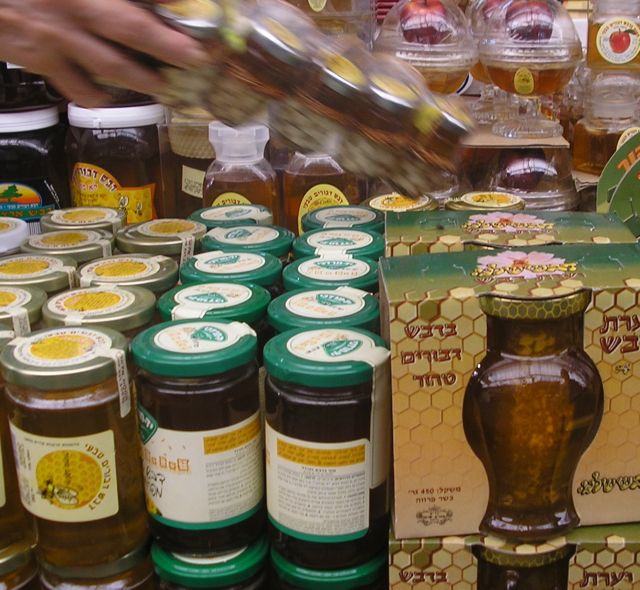
Rosh Hashanah Simanim: symbolic foods
There is a well observed custom to eat certain foods on Rosh Hashanah accompanied by requests to Hashem. We ask Him to save us, increase us, consume and destroy our enemies and give us a sweet new year. The most recognized example of this is, of course, the dipping of apple in honey and asking that our new year be as sweet as the flavors of the succulent apple mingled with delicious honey.Hints to Hashem Clearly there is something else going on here. While there are all sorts of foods we eat either by command or by tradition on other holidays, nowhere else is a customary food associated with a formulaic device such as this. Why don’t we just come out and ask G-d for our needs? Why are specific foods necessary to punctuate our request? The practice is based on a Gemara and there is definitely something of import going on. In fact, the Sefas Emes cautions us not to take this custom Rosh Hashanah lightly. He says that we should not simply recite the request, rather, we should implore Him with all of our hearts. Our heartfelt plea may arouse His mercy; it should also make us more aware of how vulnerable we are and how much we depend upon Hashem’s benevolence. The foods we use serve as a remez, a hint. We use them as to “remind” Hashem of our physical needs. No, Hashem does not need reminding; we and our needs are constantly on His “mind.” We know that it is our overriding task on Rosh Hashanah to enthrone Hashem. On inauguration day, we do not bother the King with our daily worries. But it is perfectly acceptable, even praiseworthy, to give a sign, a siman, that we depend on our Him for everything. By making these requests in the form of a hint, we relegate our needs to a place of lesser importance. We state our awareness that Crowning Hashem King is what fills up the day. 

The SimanimTraditionally we eat these foods on Rosh Hashanah because their names sound like, and therefore hint to, the good we hope Hashem will bring in the new year. Leeks, in Aramaic: karasi, which also means “to cut off.” May our enemies be cut off! Carrots, in Yiddish meheren, which also means “increase.” May our merit increase! Beets, in Areamaic, silka, which also means “remove,” May our adversaries be removed! Dates, in Aramaic, tamrai, which sounds like “consume,” May our adversaries be consumed! Gourd (such as pumpkin, winter squash), in Aramaic, kara,which also means “tear & proclaim” May our sentences be torn and our merits proclaimed! Pomegranate, because of its many seeds. May our merits be as numerous as the seeds of a pomegranate Fish or Sheep Head, because of the verse in Devarim: “…Hashem shall place you as a head (strong) and not as a tail (weak)” May we be like the head and not like the tail! Any food that carries an association in any language works just as well, so you can have fun with this practice:
Chicken livers, in Yiddish, leberlach, which sounds like “live honestly.” May our children always live honestly! Celery and raisins, in English, sounds like a “raise in salary.” May Hashem provide for us a raise in salary!
Salad Simanim

This sweet salad is a time saver, its jewel tones a sight to behold plus it’s fun to eat. All components may be made ahead of time and assembled for an impressively easy presentation of the simanim at the beginning of your Rosh Hashanah meal. It contains most symbolic foods; to include the gourd, you may sprinkle the top with toasted pumpkin seeds or make this delicious Ginger Pumpkin Souffle.My recipe for Texas Caviar is a fun and delicious way to bring in rubia, black eyed peas. ¼ cup vegetable oil juice of two medium limes 3 tablespoons honey 1 tablespoon raspberry spread 1 teaspoon cinnamon 1 teaspoon salt 1/4 teaspoon pepper 3 carrots, peeled and shredded 1 beet, peeled and shredded 1 granny smith apple, peeled and shredded 2 leeks, white part only, washed well and sliced thinly ¼ cup vegetable oil 3 tablespoons pomegranate seeds 3 dates, diced-optional 3 cups soft lettuce 1. In a small bowl whisk together oil, lime juice, honey, raspberry spread, cinnamon, salt and pepper. (May prepare dressing 5 days ahead, keep tightly covered in refrigerator.) 2. In a small pan, heat oil to very hot. Fry leeks until golden brown, 3-5 minutes, and drain on paper towels. Cool and store in a covered container. (Keeps for 2 weeks stored in a plastic bag in the freezer.) 3. In a medium bowl, toss carrots, beets and apple with just enough dressing to coat. You may toss and store them separately to maintain their colors or toss them together in which case the apple and carrot will take on the ruby tint of the beets. Refrigerate until cold. (may prepare one day ahead) 4. When ready to serve, assemble salad either on individual plates or on a serving platter. On a bed of lettuce, mound the carrot, beet and apple, sprinkle with pomegranate seeds, dates if using, and fried leeks. Serve extra dressing on the side. Makes: 8-12 servings ~ Can make ahead Active time: 30 minutesHere is a Rosh Hashanah menu that speaks to my southern and Sephardic roots. I hope you'll be inspired to make delicous Rosh Hashanah meals. K'tiva v'k'tima tova!!
Cooking for The King by Renee Chernin The book of Torah insights, recipes and practical tips designed to bring majesty to the mundane.

|
